Will It Survive the Post? A Handmade Card’s Journey from Craft Desk to Doormat
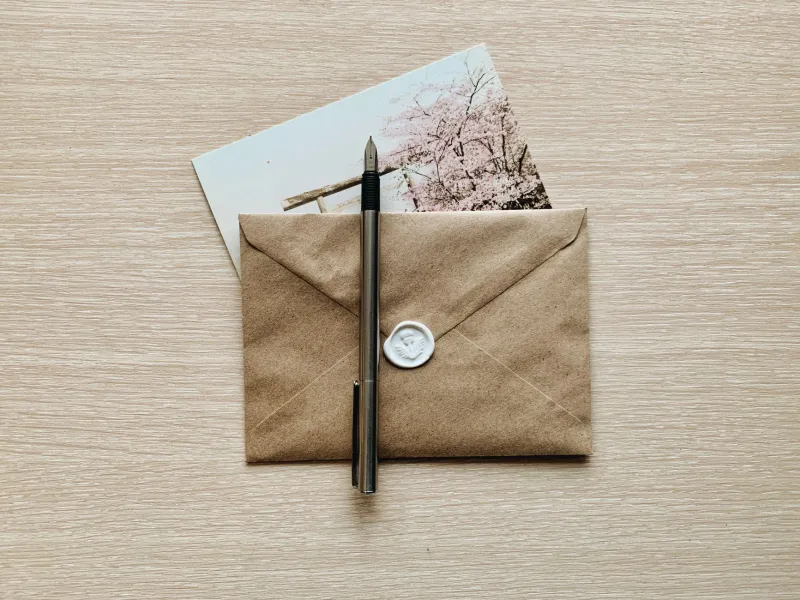
There is a particular kind of heartbreak reserved for cardmakers. You’ve spent an evening layering, stamping and fussing over a card, posted it with a hopeful little pat, and then it arrives looking as though it has been used as a coaster on a cross-channel ferry. The good news? Most postal problems are not mysterious. They are usually about size, weight, thickness or a lumpy embellishment that turned a letter into a parcel somewhere along the way.
This is not about making your cards boring. It’s about making them post-safe enough to survive real life while still looking like something you were proud to make. Think of it as a gentle pre-flight check before the envelope gets sealed.
Start with the envelope, not the embellishment
It is tempting to design the card first and find an envelope later. For posted cards, work the other way round. A standard C6 envelope takes an A6 card, and a C5 envelope takes an A5 card, but square cards and deep-fold cards often push you into large-letter or parcel territory. If the card does not slide in easily, the recipient will inherit the problem.
Check the outer measurements of the envelope, not the card blank. Royal Mail’s letter size is roughly 240mm x 165mm x 5mm and up to 100g. Large letter goes up to about 353mm x 250mm x 25mm and 750g. Anything beyond that is generally a parcel. Rules and prices change, so check the current Royal Mail guidance before you post a batch, especially if you are sending overseas.
A quick win is to keep a few envelopes in common sizes and design within them. C6 for little note cards, C5 for bigger makes, and a larger envelope if you know the card is going to be chunky. A card that fits its envelope comfortably already has a better chance.
The letter-versus-large-letter question
A lot of handmade cards accidentally become large letters because of thickness. That 5mm letter limit is not very generous once you add foam pads, a folded insert and a bow. If your card is borderline, do not guess. Make a simple gauge by cutting a 5mm slot in a piece of card and sliding the filled envelope through it. If it sticks, it is not a letter.
Remember that large letter is not a disaster. It is often the sensible home for a layered card. The problem is when you pay for a letter and the sorting office decides otherwise. If you are posting several cards, ask at the Post Office for a quick check on one of each type. It is much less painful than a surcharge card landing on a friend’s doormat.
Weigh it, don’t guess it
Kitchen scales are your friend. Weigh the card inside the envelope, with the address label and anything else you are sending. Card blanks, inserts, ribbon and metal charms add up faster than you think. If you are close to the 100g letter limit or the 750g large-letter limit, assume you are over and adjust.
For heavy embellishments, consider whether they are doing enough design work. A single large button can be lovely, but three metal charms and a beaded pin might be better saved for a hand-delivered card. If you want to keep the look, use stamped or die-cut shapes instead. They give the same visual weight without the postal weight.
The lump test, and what to do about it
Run the flat of your hand over the filled envelope. If you can feel a distinct bump, the sorting machinery probably can too. Bows, pearls, thick foam pads and shaker windows all create high spots. A useful rule: if it casts a shadow, it is a lump.
You do not always have to flatten the design. You can recess the lumpy bit in an aperture, use a thinner foam pad, or switch to a flat printed element. If the card is for a local friend, hand delivery is a perfectly good solution. If it must go in the post, a padded envelope or small box may be the kinder option, even if it costs a little more.
Stiffeners: support, not armour
A stiffener can stop a card bending, but too much rigidity can turn a large letter into a parcel. Cut a piece of thin greyboard or clean card slightly smaller than the envelope and place it behind the card, not in front. Avoid sharp corners and do not tape it to the front of the design. The aim is support, not a sandwich board.
If you are sending a card with a folded spine or a delicate die-cut edge, a slim piece of card behind it can help. Just check the total thickness again. Stiffeners are there to protect the card, not to test the postman’s patience.
Address it like you mean it
Use a clear label or write in strong, dark ink. Include the full postcode and a return address on the back. Pale envelopes with metallic ink look lovely on the desk but can be harder to read. Leave plenty of clear space around the address and avoid putting washi tape over the postcode.
If you are posting internationally, check the customs and size rules before you seal anything. A beautiful card is not much use if it is held up for a missing detail.
Christmas 2026 posting dates: plan backwards
Royal Mail publishes its Christmas last-posting dates in late autumn, so for Christmas 2026 check the official dates before you commit to a posting day. As a general habit, aim to post Second Class by mid-December and First Class earlier than you think you need to. For overseas friends, post even earlier.
Write your cards in batches and post them in one trip. It sounds obvious, but the crafter who posts on 23 December is usually the crafter who spent the previous week adding one more bow. Give your cards a buffer and everyone is happier.
Three fixes that save almost any card
First, flatten the design. Swap a dimensional bow for a stamped one, or use a thin die-cut shape instead of a thick chipboard piece. Second, upsize the envelope. A slightly larger envelope can turn a tight, lumpy card into a comfortable large letter. Third, decide whether it is a card or a parcel. If it needs padding, wrapping or a box, treat it as a parcel from the start and budget accordingly.
None of this takes away from the handmade charm. A card can be layered, textured and full of colour and still be post-safe. You are simply designing for the journey as well as the mantelpiece.
The reassuring bit
Most handmade cards arrive beautifully. The ones that don’t usually had a small, fixable issue: a little too thick, a little too heavy, or a decoration that wanted to be a parcel. Give your card a quick weigh, a gentle press and a sensible envelope, and you can post it with confidence rather than crossed fingers. That is what we want: lovely cards, happy recipients and no sad little surcharge notes through the letterbox.