Why Your Christmas Stash Is Full and Your Birthday Drawer Is Empty
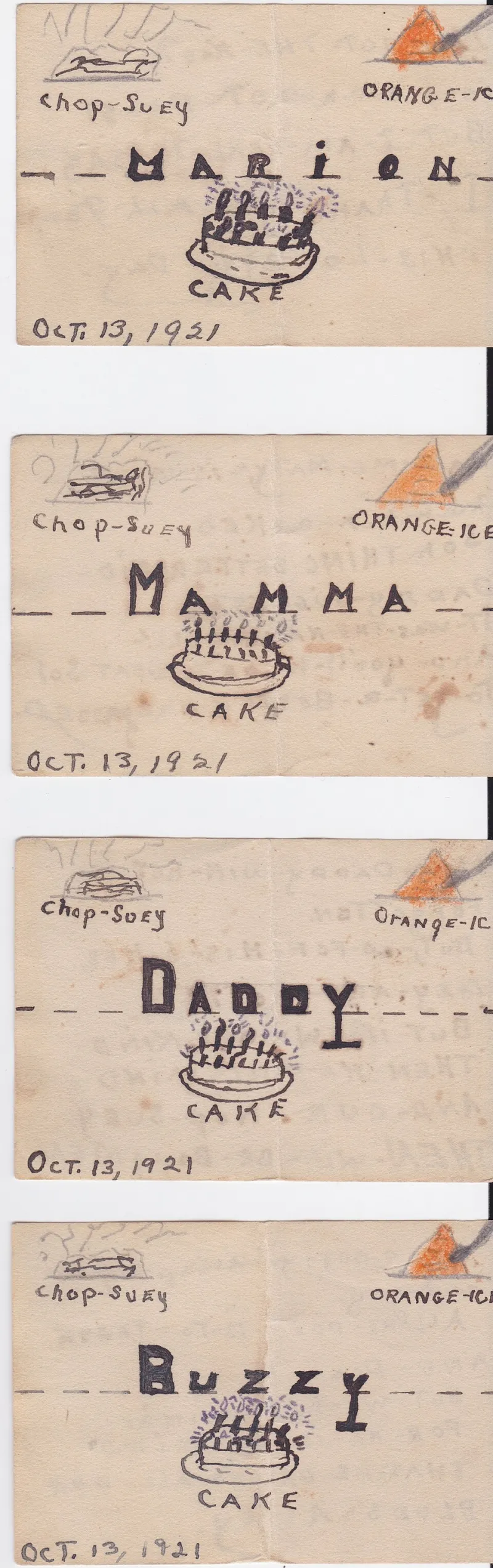
Photo: Deceased relative of Infrogmation. Please credit "Family collection of Infrogmation of New Orleans", CC BY-SA 4.0, via Wikimedia Commons
Every November, the same scene plays out in craft rooms across the UK. The festive papers come down from the shelf, the Christmas dies get sorted, and before long there are 18 cards drying on the radiator. Then February arrives, a friend's birthday appears on the calendar, and we grab a shop-bought card on the way to the party. It is not a character flaw. It is a system problem, and it is one we can fix without turning card-making into homework.
The Christmas bias is real
Christmas has a built-in deadline. It is on the same date every year, it is advertised from September onwards, and everyone is making at the same time. Birthdays are quieter. They arrive one at a time, often on a Tuesday, and there is no collective push to get ahead. Christmas cards can also be batch-made. You pick a design, make twelve, and feel virtuous. Birthday cards feel more personal, so we put them off until we can give them proper attention. Then life gets in the way.
The result is a strange split: a drawer full of handmade festive cards in January, and a panic-bought birthday card in June. If that sounds familiar, you are in good company. The fix is not to craft more. It is to make the everyday birthday as visible as Christmas.
A monthly birthday-card club that actually works
The most useful change is also the least glamorous: a monthly birthday-card club. It can be a club of one. Put a recurring reminder in your phone for the first Sunday of every month. Make a cuppa, open your calendar, and write down every birthday in the following month. Then make three to five cards. Not twenty. Not a full production line. Just enough to cover the next few weeks.
If you prefer company, invite two or three crafty friends to do the same on a video call or at a local craft group. You do not need a formal swap. Everyone makes their own cards, but the shared hour keeps you accountable. A small box labelled Birthday Drawer does the rest. Once a card is made, write the recipient's name on a sticky note and put it inside. When the date arrives, you are not starting from scratch.
Colour-code the stash, not the chaos
A birthday drawer only works if you can find things in it. Try a simple colour-code for your card blanks and envelopes. Kraft or recycled brown for birthdays, white for thank-you cards, and pale grey or blue for thinking-of-you. It is not a strict rule. It is a visual shortcut. When you have ten minutes, you can pull out the kraft pile and know you are halfway to a birthday card.
Keep the system small. A handful of card blanks, a few sentiment stamps, a black ink pad, some enamel dots and a couple of patterned paper scraps are enough. Store them in one box rather than spread across the whole craft room. The aim is to remove decisions, not to build a second shop. If you have a huge stash, use the colour-code on the envelopes too. A dot sticker on the back of each envelope tells you what is inside without opening the box.
Three quick layouts for real-life birthdays
These layouts are deliberately simple. They work with A6 card blanks, 10.5cm squares, or whatever you already have. The measurements are a starting point, not a test.
The five-minute band
Cut a strip of patterned paper about 4cm deep and slightly narrower than your card front. Adhere it across the middle. Add a narrow strip of cardstock on top, then a stamped or die-cut sentiment. Finish with three small enamel dots or punched circles. This layout hides a multitude of sins, including a slightly wobbly trim.
The centred circle
Die-cut or punch a circle from scrap card. Mount it in the centre with foam pads. Add a smaller circle or a punched star inside. Stamp the sentiment underneath in a straight line. If you do not have a circle punch, a square works just as well. The point is a strong shape and a clear greeting.
The corner cluster
Choose three small scraps in colours that make you happy. Trim them into squares or rectangles and overlap them in one corner. Add a strip of washi tape and a sentiment in the opposite corner. This one is brilliant for using up the tiny pieces you cannot bear to bin.
Make it easier than buying
A handmade birthday card should not feel like a second job. Keep a few stamps and a pen in the birthday drawer so you can write the card straight away. Add a book of second-class stamps and a couple of spare envelopes. If you post early, Royal Mail is not the enemy. If you are hand-delivering, even better. The goal is to have a card ready before you need it, not to create a masterpiece every time.
Start with next month, not next year
Do not wait for January and do not promise yourself a full year of handmade cards. That is how the birthday drawer stays empty. Open your calendar now, find the next birthday, and make one card this week. Then put the reminder in your phone for next month. Christmas can keep its sparkle. Birthdays deserve a bit of glue too.